
The Books That Made Me A Writer
A reflection by author Layla Kara on World Book Day.
Once my mother brought me back from her travels a book and it wasn’t a collection of bedtime stories. It was a visceral rendering of the Bible, filled with sketches of epic battles and divine wrath. It seems that even as a child; I didn’t want soft edges. I always leaned towards the graphic reality, like the story of Sodom and Gomorrah being erased from the earth. I sat in my room for hours, drinking in the violence and the scale of that biblical epic, fascinated by the idea of a world that could be unmade in an instant, because of the choices humans make.
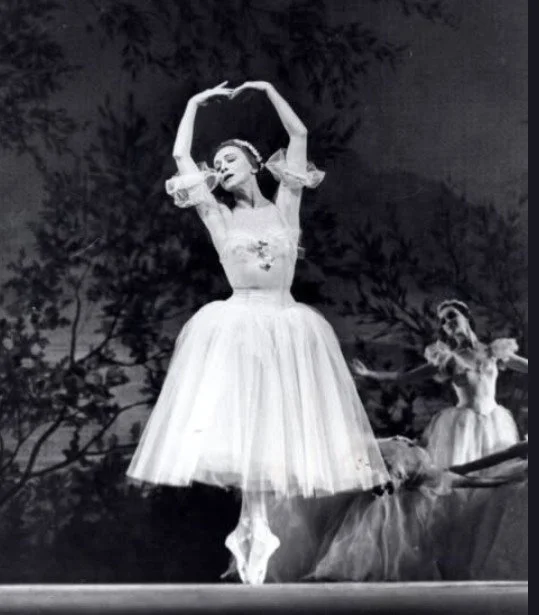
Then there was the book; it was called “The Story of a Girl”. It was about Galina Ulanova, the famous Russian ballet dancer. Reading about her childhood taught me that the feminine heart is a fortress. Her life was a series of brutal hurdles, yet she moved through them with a relentless, disciplined will. It was my first genuine encounter with the idea that beauty isn’t just aesthetic—it is forged through endurance and a refusal to break.
But it was the work of Victor Hugo that finally set the fire. The Hunchback of Notre Dame took over my imagination and never let go. It showed me the cruelty of the world in its most naked form, wrapped in a gothic atmosphere that felt more like home than any bright, lively pictures. It proved that love exists even in the rot, and that the power of human will is the only thing capable of standing against a dark and indifferent world.
These books and many others made me the writer I am today.
I don’t believe in empty stories, shallow stakes and always happy endings. I want my work to be an obsession with heavy character development and the internal wars we fight every day. I want to explore how love and will survive when the world becomes a place of ancient rituals and beautiful monsters. There has to be a moral carved out of the wreckage. There has to be a reason we survive the dark.
The shift happened in the quiet spaces between the books I used to love. For years, I was a consumer of stories, hoarding them in my heart and echoing their rhythms in my journals. I composed rhymes to match my moods, a way to process the world, but eventually the stories stopped hitting the same. Perhaps it was the natural jadeness of growing up, the collection of scars you gather as life tests your limits. My body had grown used to the same drug. I craved something stronger. I wanted more hurt, more tears, and revelations that left me shaking. I wanted morals that were hard to swallow and harder to forget.
The more I read, the more the literary world seemed to shrink. Everything felt safer, more restrained. The stakes were lowering; the monsters were becoming misunderstood boys who just needed a hug. The prose had turned into a utilitarian vehicle for predictable plots. There was no rot. There were no ancient rituals or senses of cosmic devastation. I wanted lovers who would burn the world to ash rather than let go of one another, and I wanted to see the world actually catch fire. I wanted souls to be unmade. I craved that specific silence of finishing a book and staring at a wall for an hour, forced to question my own decisions.
Writing was never a hobby.
It was the only outlet for an inner self that was beginning to scream. I realized that if I wanted a story that was tight, brutal, and alive, I had to be the one to bleed it onto the page. I stopped looking for the book that would gut me and started building the sanctuary myself. I needed to see the broken and the whole coexist in a way that felt honest to the darkness I knew existed.
I returned to the keyboard with a new ferocity. Inspired by the structures and discipline of writers like Jay Kristoff, Joe Abercrombie, Keri Lake, and Adelyn Grace, I decided it was time to spill my own heart. Every time I sit down to draft The Fallen Grace Chronicles, I am filling a silence that has lasted too long. I am writing for the reader who is bored of marketable fluff and tired of stories that offer no moral at the end of the wreckage.
There is a tired assumption that the darkest stories belong to men, but I am here to prove that a woman can lean into the dark and not break. We are strong enough, and unhinged enough, to tell the stories that rot but still prevail. I was tired of waiting for someone else to have the courage to tell the truth, so I decided to do it myself.
When a reader dives into the world of The Fallen Grace, I hope they find the gut-punch I was always searching for. I want them to encounter a world that doesn’t blink in the face of rot or ruin. I want them to see heroes who are not victims of their trauma, but a product of their own iron will. Most of all, I hope they find that rare, haunting satisfaction of a story that refuses to play it safe—a world that makes them sit in the dark, staring at the wall, feeling both unmade and entirely seen.
I wrote it because I needed to know that even in a world of destruction and unfairness, we can choose to prevail. Because I strongly believe that our lives are built by our choices!
Layla Kara
